Have you ever experienced the irrational fear of a small animal or an insect? Well, I have. I have been afraid of mice and rats for as long as I could remember, but I could never explain myself the reason why. According to the Cambridge English Dictionary, this is called a phobia and it is defined as “an extreme fear or dislike of a particular thing or situation, especially one that is not reasonable”. We know that it is not reasonable to fear a tiny creature that cannot harm us, and yet, we run about like crazy people screaming and shaking from all our bones. This is what I have done whenever I ran into a mouse or a rat. I entered a room fearing that I might see one and I could not manage to control myself under different circumstances whenever I knew that I might see one. As a person who lived most of her life with her grandparents, life in the countryside was a burden. I could not imagine going to the attic or the basement because I knew that they might be there: those unimaginably scary creatures that caused my biggest fears. And I am not the only one. I am sure that each and every one of us fears something. We are all grownups who might not be able to control ourselves at the sight of what scares us and this is a reaction that anybody can have.
Why read books with rodents as main characters?
I started thinking of this situation a couple of years ago when I started studying an MA course which was entitled Animal Tales. I thought that I would only deal with dogs, cats, horses and pigs, but it was not like that. While hearing my teacher speak, I saw my biggest enemy on the screen – a rat. My initial reaction was to grab my jacket and run to the door which I did until I noticed how crazy I might seem to those around me. So I started reading as many books as I could in which the main characters were the rodents. You will probably ask yourselves why torment myself with reading books in which the main characters are the very creatures I do not like. I will tell you why. Because literature has the magic feature of transforming what we know as being ugly into creatures that may be dear to the reader. Literature manages to take us into the lives of these animals and give them such features that make the readers fall in love with them.
Where do mice stand in childrens’ literature?
In an article called “Mice and rats in children’s literature,” which was posted online on the 20th of August 2015, Linsey Stace, a self-declared aficionado of rodent-infested literature, explains why authors seem to like to have these small creatures as protagonists. They have come to be a part of literature only because small helpless children can easily identify themselves with these animals. A major difference between them would be that mice are portrayed as harmless and sympathetic whereas rats are seen as ruthless and brutal. Stace thus mentions that:
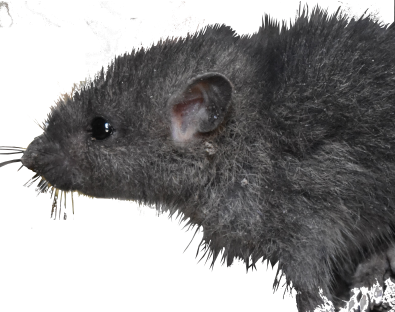
Mice are small, secret, numerous and usually hidden. They are beautiful and neat and, one must feel, courageous to live with us so closely. Their fur-coated bodies make them endearing and strokeable (Stace, “Mice and rats in children’s literature”).
The article recommends titles of books about rodents that are worth reading, starting with early titles from the eighteenth century, like The Life and Perambulations of a Mouse written by Dorothy Kilner in 1784. Then, the author specifies that any reader of books for children must take into consideration the Beatrix Potter series, or the ones written by E.B.White. He also mentions the perennial Mickey Mouse of the Disney series, or some of the recent writings like The Tale of Despereaux by Kate DiCamillo (2003). Incidentally rodents also occur in fictions like The Adventure of the Sussex Vampire by Arthur Conan Doyle, La Peste by Albert Camus, and even Ninety Eighty-four by George Orwell. Even though some of these titles do not actually fall in the category of books for children, they all present the lives of different rodents. Moreover from among the books written for children, a reader should also have knowledge of titles like: Abel’s Island by William Steig, The Cricket in Times Square by George Seldon, Angelina Ballerina by Katherine Holabird and Helen Craig, and The Mouse and his Child by Russell Hoban. All of these books are worth reading because in them, one can discover a miniature mirror world of human beings, a world that unfolds near us, as these creatures live among us, the humans.
Ideas of books to start with
Life & Perambulation of a Mouse
The Life and Perambulation of a Mouse was written in 1784 by Dorothy Kilner, a female writer who focused on writing stories for young children, out of which the latter can learn how to behave in the society of the time.
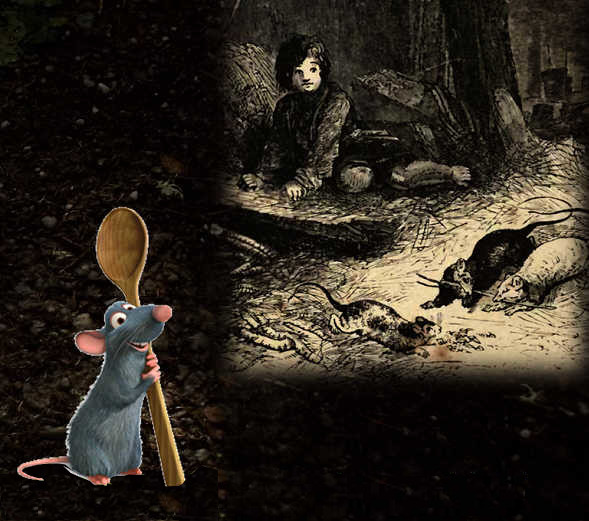
(Collage by Storynook Pooka.)
The story starts with an Introduction in which the narrator explains that because of bad weather, she is confined indoors in an area of England together with some friends. Suffering from boredom, one of them gives the other the task of relating the stories of their own lives. Everybody agrees, but when the author starts to think about what she could write, she realizes that she is clueless and does not know what to write about. It is then when she hears a voice telling her to write about “its story”. Confused at what she heard she comes to realize that in the room with her, there is a mouse who wants people to know his story. This story presents the lives of four mice brothers: Longtail, Nimble (the narrator), Softdown, and Brighteyes. Their names are clear physical descriptions of how they look like. The main feature of Longtail is bravery; Softdown , as his name suggests ‚is — both in character and physical appearance —quite soft, while Brighteyes, the weakest of them all, is easily scared and very slow. Nimble, the narrator, is a mouse that throughout its recollection of his life, keeps on highlighting its love for food, and that he loves nibbling and gnawing everything that it finds. The story starts with the mouse speaking about what is the first thing in his life he can remember, and that was his mother’s words when she decided to allow him and his brothers to start providing for themselves.
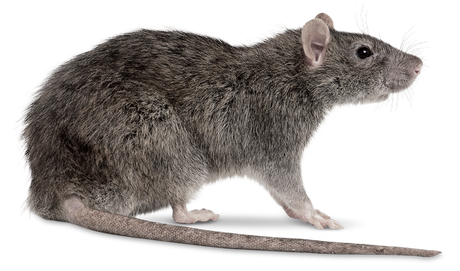
‘I have, my children, with the greatest difficulty, and at the utmost hazard of my life, provided for you all to the present moment; but the period is arrived when I can no longer pursue that method: snares and traps are everywhere set for me, nor shall I, without infinite danger, be able to procure sustenance to support my own existence, much less can I find sufficient for you all; and, indeed, with pleasure I behold it as no longer necessary, since you are of age now to provide and shift for yourselves; and I doubt not but your agility will enable you to procure a very comfortable livelihood. Only let me give you this one caution —never (whatever the temptation may be) appear often in the same place; if you do, however you may flatter yourselves to the contrary, you will certainly at last be destroyed.’ (Kilner, 265)
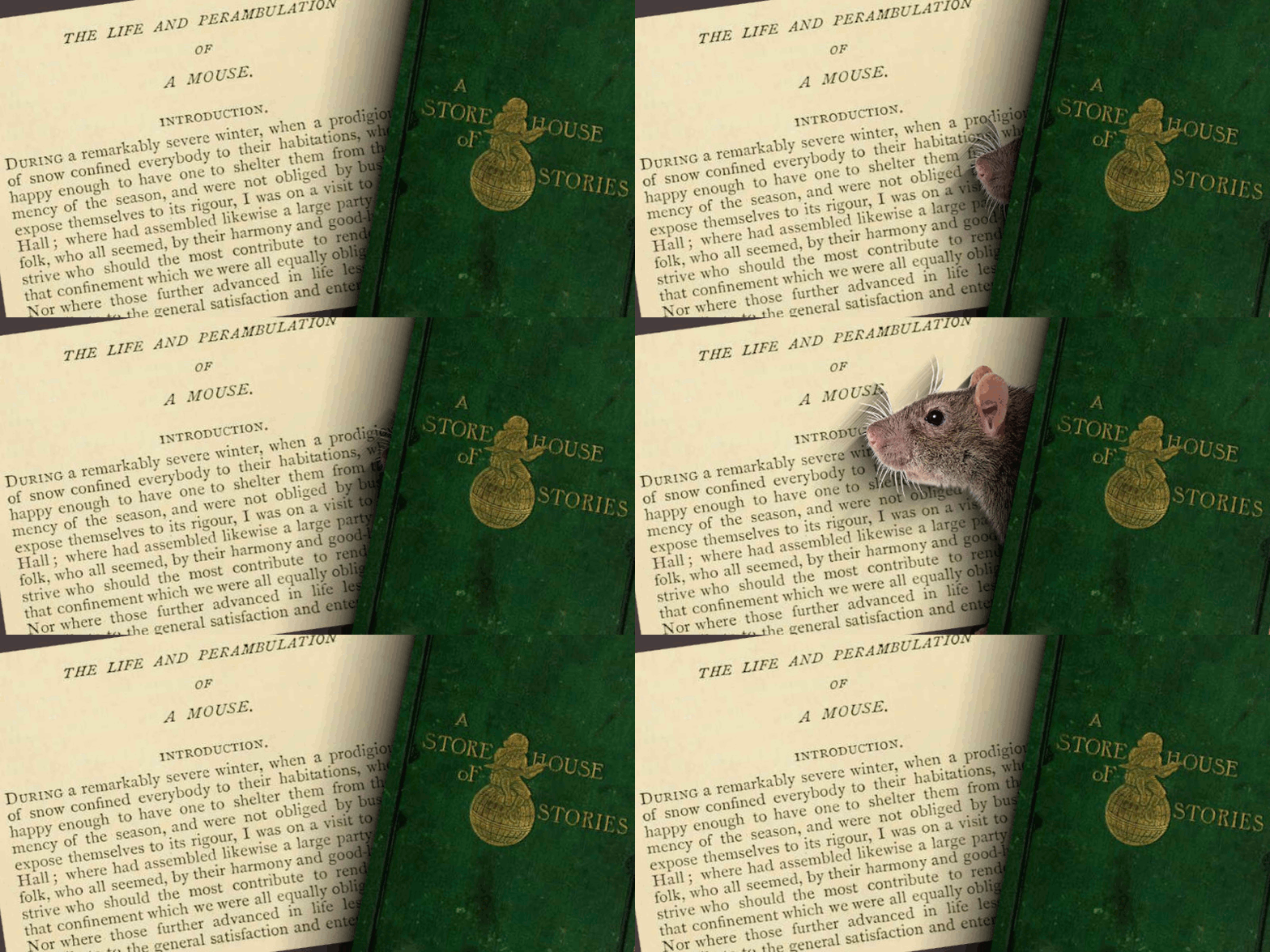
(Collage-animation by Storynook Pooka. Rat image from webstockreview, book cover and page from Archive.org)
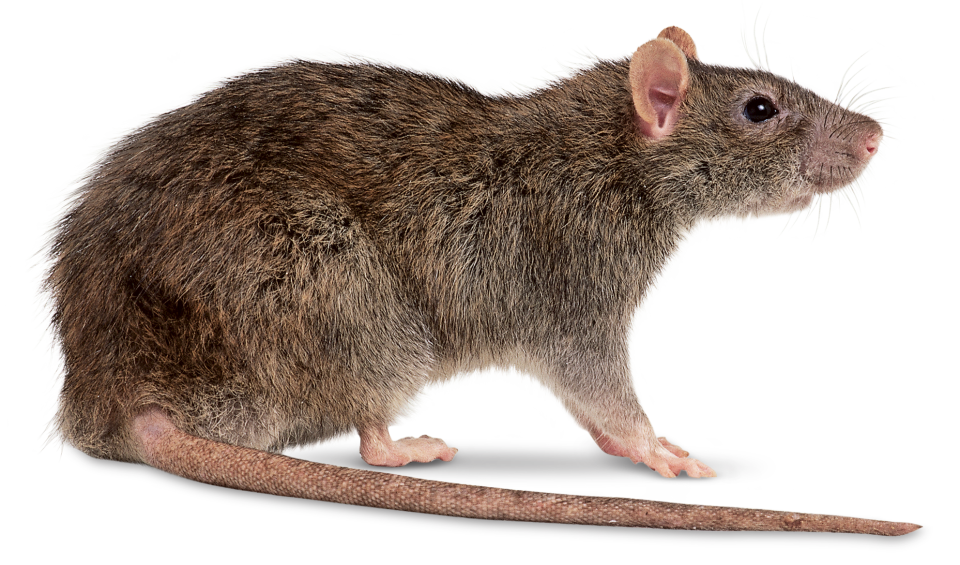
The Life and Perambulation of a Mouse as a book written for children, could have been used in educating by scaring children in order to prevent them from doing bad deeds. Although meant for children, this book is difficult to read and, at the same time, difficult to understand by the nowadays young reader. However, why not start with a book which presents other ways of living and which takes us back to the beginning of literature with mice and rats.
Stuart Little
Stuart Little written by E.B. White in 1945 is another book meant for children in which the main character is a very unusual one. It is a small little mouse. This mouse was the second son of Mr & Mrs. Frederick C. Little, and the brother of George, their eldest son.
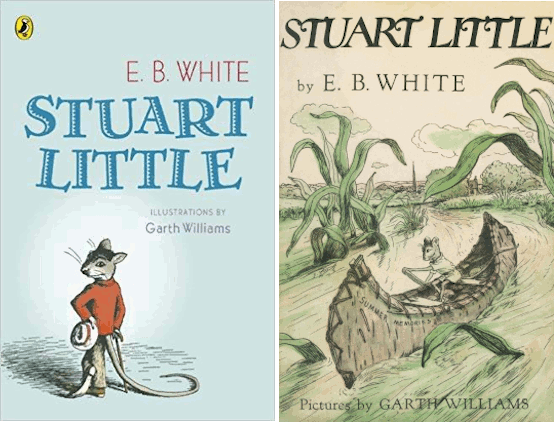
The truth of the matter was, the baby looked very much like a mouse in every way. He was about two inches high; and he had a mouse’s sharp nose, a mouse’s tail, a mouse’s whiskers and the pleasant shy manner of a mouse (White, 2).
What is more, even though nobody knows exactly how he arrived into the Stuarts’ house (as this is nowhere explained in the book), he is received with great joy and happiness. Moreover nobody felt that this was an extreme or exaggerated situation because, even if the family noticed Stuart’s similarities to a mouse, they still acted as if he had been just another family member. The first thing that the family did was to provide him with comfort. They built him a bed out of clothespins and cigarette box, they tailored suitable clothes for them; they gave him bathroom objects made for his height and arranged the house so that Stuart could easily walk through it, without encountering any difficulties. They made Stuart be another member who, just like any other little boy, gets into troubles and manages to be smart enough to solve them by himself.
The Tale of Despereaux
In The Tale of Despereaux written by Kate DiCamillo in 2003, the reader discovers the story of a mouse called Despereaux who is not interested in normal mouse activities. He prefers reading books (instead of gnawing them), and does not like to hunt for food. Yet, the worst of his behaviors is that he allows a human being to see him. Thus, he falls in love with Princess Pea to whom he swears love forever. After having committed such a big mistake, he is sent to the dungeons to be eaten by rats. The book moves then to Roscuro, a rat who is different from all rats, because he does not take any joy in tormenting people and loves the light instead of fearing it.
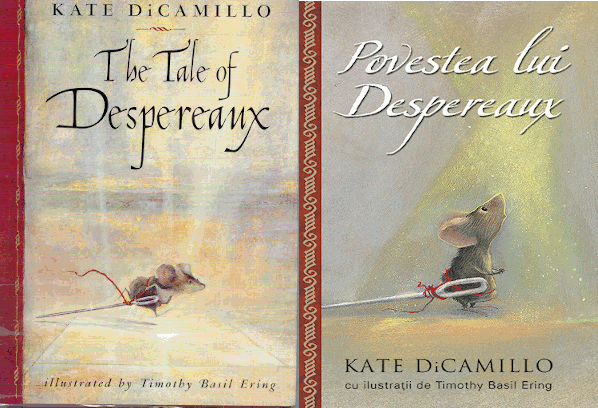
One day, while venturing through the castle, he is seen by people, falls in the queen’s bowl of soup, and sees the look of disgust that humans have for him. And this ignites in him the need to take revenge on them. After a plot which takes the reader into the dungeons of rats, followed by the revenge of Roscuro against the princess and the bravery of Despereaux who saves her, the end of the book is a happy one. The princess and the mouse remain friends forever and the rat is allowed to venture around the castle.
What of Roscuro? Did he live happily ever after? Well… Princess Pea gave him free access to the upstairs of the castle. And he was allowed to go back and forth from the darkness of the dungeon to the light of the upstairs (DiCamilo, 266)
And what of Despereaux? Did he live happily ever after? Well he did not marry the princess, if is what you mean by happily ever after. Even in a strange world as this one, a mouse and a princess cannot marry. But reader, they can be friends. (DiCamillo, 267)
Conclusion
In a nutshell, there is a large variety of books for children that have as protagonists animal species commonly (and unjustly, I would say) called vermin. Some of you might be repelled by such a subject. If it is so, my advice for you is not to judge a book by its covers, but to read it closely, as you may never know who you’ll fall in love with. You will never know what similarities you can find between yourself and the creatures that scare you. And, most importantly, you will be conquered by the special world that these books take you to, a world in which an ugly creature will eventually turn out to be a beautiful one; a mean one becomes a kind one; a not-so-smart one will prove to be intelligent. These are books in which you will definitely find new “friends” that will make you change your minds forever.
References:
”Phobia.” Cambridge Dictionary .Available online: https://dictionary.cambridge.org/dictionary/english/phobia [13 December 2019]
DiCamilo, Kate. The Tale of Despereaux. Berryville USA: Candlewick Press, 2003.
Kilner, Dorothy. “The life and perambulations of a mouse” in A Storehouse of Stories, editor Charlotte M. Yonge, London: Spottiswoode, 1872, pp. 262–334. [facsimile on Archive.org]
Kilner, Dorothy. The Life and Perambulation of a Mouse. vol. II. 1784, on The Hockliffe Project,
Stace, Linley. “Mice and rats in children’s Literature”. 20 August 2015.web. Available online: http: //www.slaphappylarry.com/mice-in-childrens-literature/ [24 June 2018]
White, E.B. Stuart Little. New York: HarperCollins, 1999 [original publ. 1945]
(written May 2018, adapted Dec 2019)
Ioana Vălean