Selected and Translated by Keith Gessen and Anna Summers
“My stories are a mirror. People see themselves in them. If they see evil, it means they’re evil. If they see good, it means they’re good.” (Petrushevskaya qtd. in Guzeva 2018)
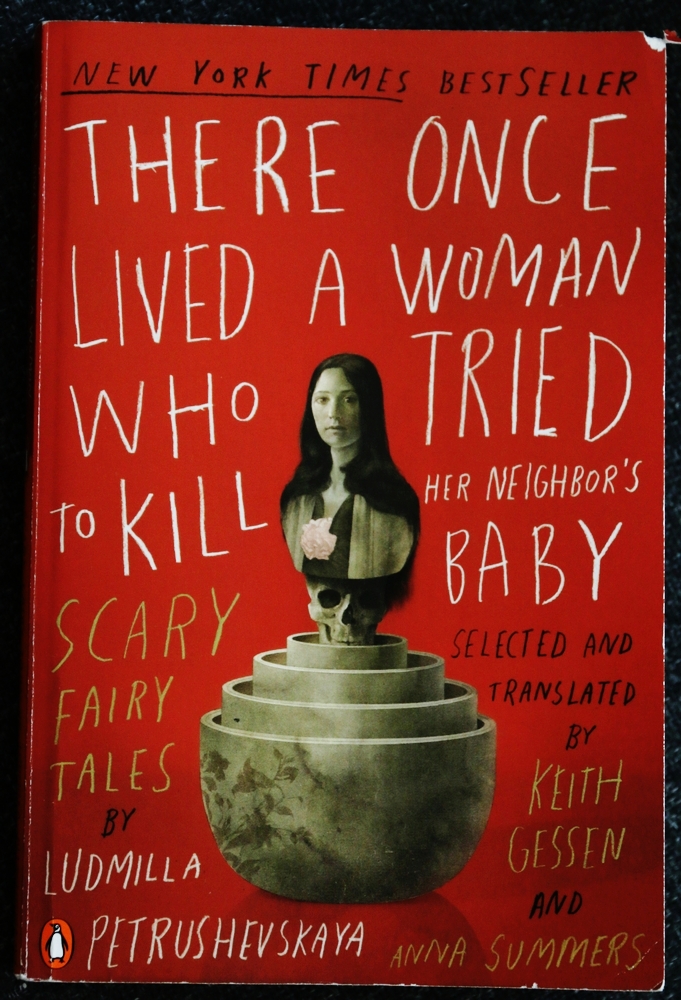
Mysterious, unpredictable, hallucinating, brutal, yet honest, empathic and preserving a pure and direct style – these would be some elements that could describe Petrushevskaya’s collection of scary fairy tales.
The sinister environment in which her characters live is connected with their thoughts and inner world. The grotesque and darkness – made of nightmares, parallel worlds, hell or trauma – are real. Despair, grief, jealousy, sacrifice, alcoholism, loss, horror, hopelessness and breakdown (of a person or of a civilization) make up the world of her characters. Nevertheless, there is always a tiny ray of light that makes darkness “frown” for its incompetence to gobble up the essence of mankind. Light has several faces: an act of kindness, a form of forgiveness or an expression of love. Everything may seem lost or destroyed, but optimism of any kind never fails to regenerate or redeem a character’s spirit.
Ludmilla Petrushevskaya is a contemporary Russian author, some critics even considering her to be the greatest Russian writer at the moment (after Solzhenitsyn’s death). Born in 1938 during Stalin’s rule in a Bolshevik family, she suffered a rough upbringing.
Her literary works were banned at first because of their frankness and the dark reality they were presenting, as well as for the type of characters in Petrushevskaya’s stories (such as orphans). When her stories and plays were finally published, she gained a strong reputation among writers and became one of the most important figures in contemporary Russian literature. A playwright, fiction writer, painter and singer (she started singing cabaret), Ludmilla Petrushevskaya was also the initiator of women’s fiction movement in Russian letters. She is known for books, such as: The Time: Night (1992), The Girl from the Metropol Hotel: Growing up in Communist Russia (2006); There Once Lived a Mother Who Loved Her Children, Until They Moved Back In: Three Novellas About Family (2014); There Once Lived a Girl Who Seduced Her Sister’s Husband, and He Hanged Himself: Love Stories (2013).
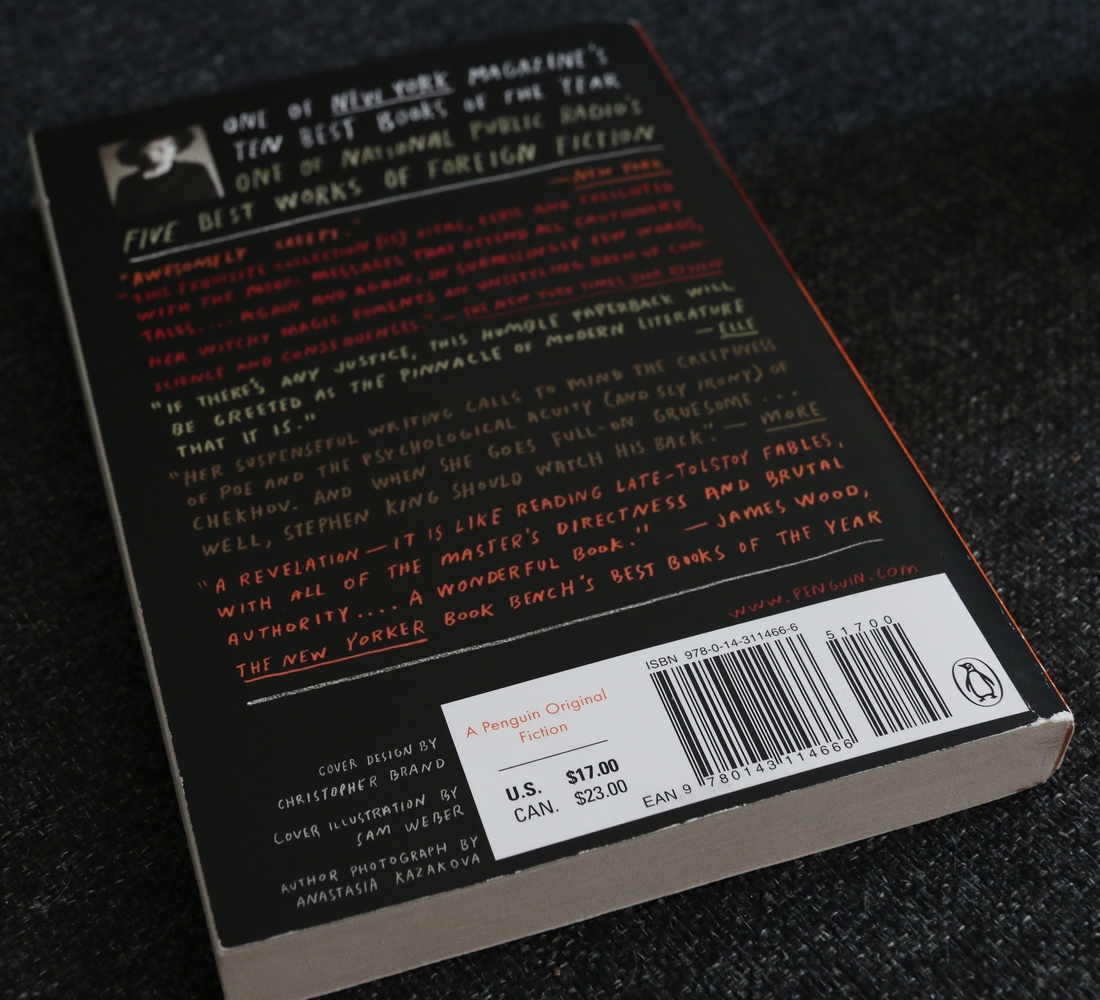
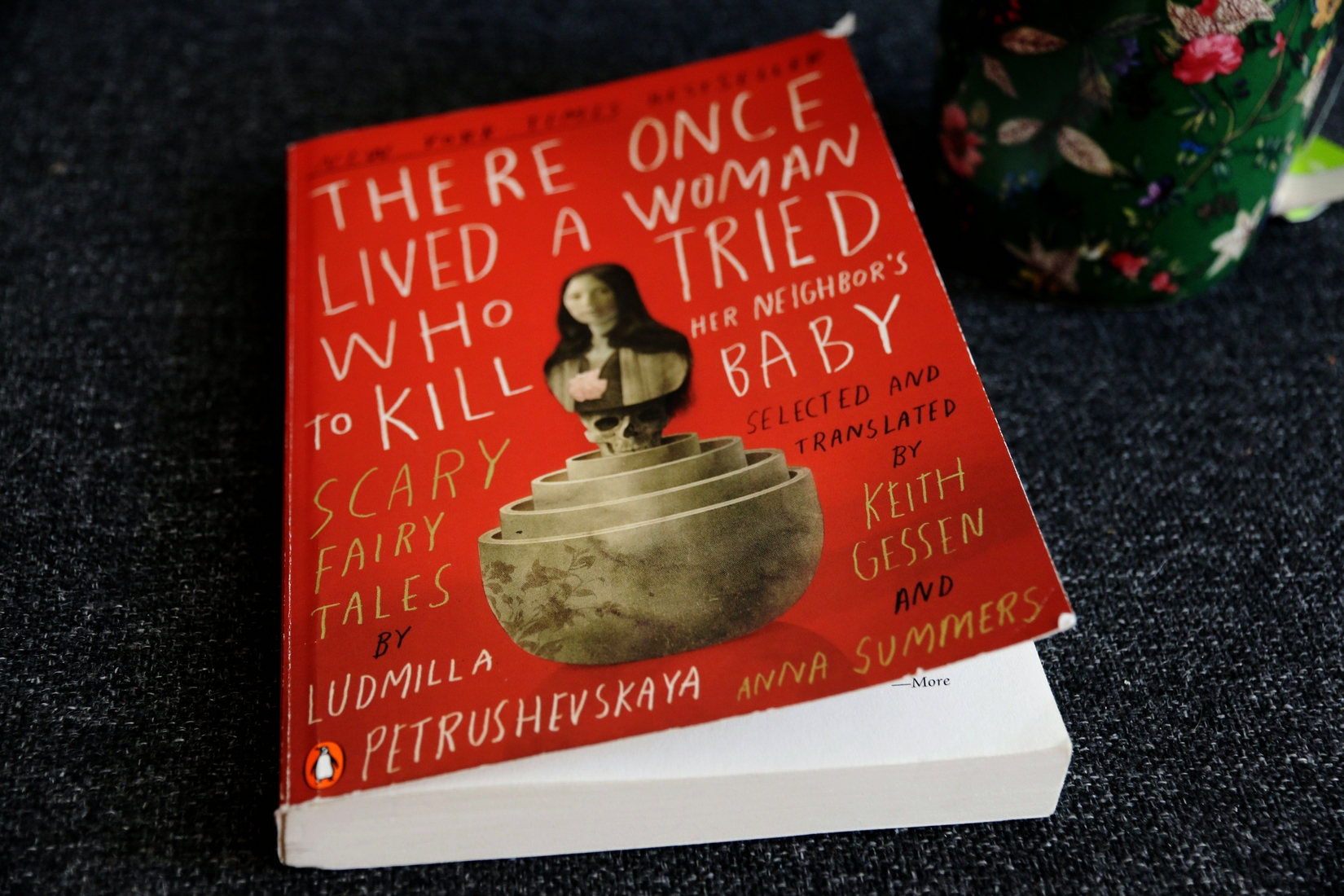
All the stories in There Once Lived a Woman Who Tried to Kill Her Neighbor’s Baby (2009) have a particular kind of mysticism about them (specific to folk tales and fairy tales) that approaches the characters’ psychology. The stories are separated in four sections: Song of the Eastern Slavs, Allegories, Requiems and Fairy Tales. The book seems intriguing for the reader right from the beginning. With a title that is controversial, the reader plunges into discovering what reasons the woman could have had to be willing to commit such an infamous deed. Thus, the title seems to be the first element that makes the reader want to find out more.
Then, the second aspect that captivates the reader’s attention is the fact that there is no story with the name present on the cover; again, strange! While reading, we actually discover that the story we were looking for is called Revenge and that the title of the collection is given on purpose to sound outrageous and to give a small foretaste about the topic of her texts.
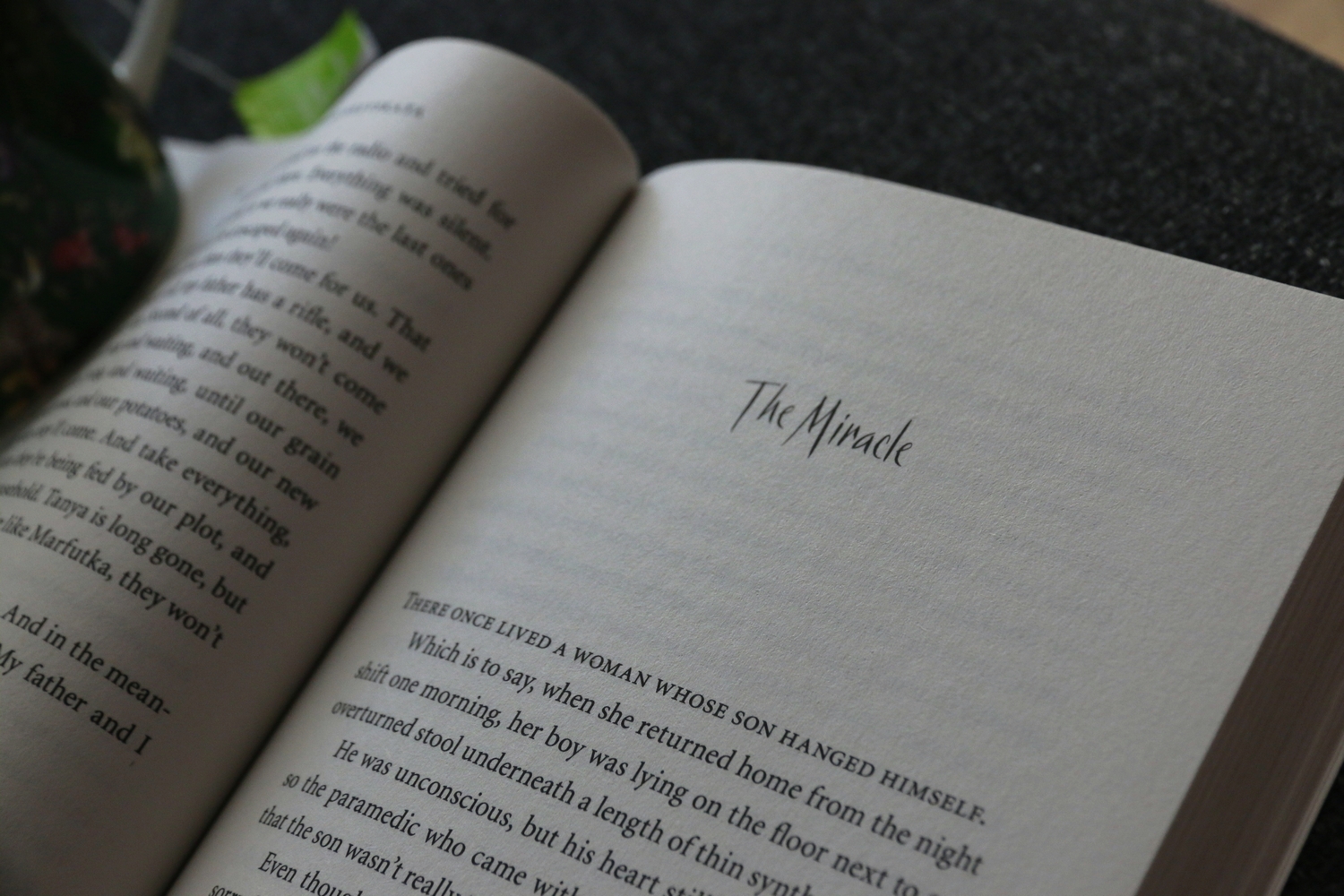
Her writing is very direct and simple, but it requires the reader’s interpretative insight. She sketches and comprises the story as if told in a conversation, with moments when she presents a fragmentary opinion about a topic, makes a comparison or a metaphor:
Upon these characters, with a great artist’s great heartlessness, Petrushevskaya doesn’t waste a drop of sentimentality. The narration is unflinching, brusque, as sharp and as cruel as the world that it tells of. (Deresiewicz 2014)
In the introduction made by Keith Gessen and Anna Summers (2009), they call out an important element in Petrushevskaya’s stories: the two critics trace down a connection between her texts and the Odyssey:
The ancient Greek Menippus once visited Hades, and since then the satirical genre named after him has often been said to include visits to the literal or social underworld. These visits are called nekyia, a night journey, after Homer’s term in the Odyssey. Classic nekyia describe travels to the underworld and dialogues with the dead… (Gessen and Summers 2009)
Nearly all her stories in this collection approach this way of travelling to the other world: her characters are separated from the reality they once knew for various reasons: suicide attempt, car accident, or various psychological traumas. Petrushevskaya called this secondary world Orchards of Unusual Possibilities (Gessen and Summers 2009). Many of her stories start in this world with the characters being clueless about the environment in which they live. For instance, in one of the stories, a man cannot find his child, but he actually does not know how this child looks. In another one, a girl suddenly finds herself by the side of the road having no idea about her identity: “The girl didn’t remember her name or who she was.” (Petrushevskaya 2009)

The feminine characters are powerful figures in her writings. They are bound to negative emotions (grief, obsession, jealousy, sorrow or despair) only to find an optimistic way out that makes them believe in hope again. One character realizes the importance of living and manages to come back from the edge of death; another one tries to get help from an alcoholic homeless person.
Her characters, both male and female, remind of a famous quotation from Stalker (1979) directed by Andrei Tarkovsky where Stalker makes a comparison between strong and weak people:
Weakness is a great thing, and strength is nothing. When a man is just born, he is weak and flexible. When he dies, he is hard and insensitive. When a tree is growing, it’s tender and pliant. But when it’s dry and hard, it dies. Hardness and strength are death’s companions. Pliancy and weakness are expressions of the freshness of being (Rotten Tomatoes).
Petrushevskaya’s characters find strength in their weaknesses. Some of the weakest characters manage to make it out alive from the pit of death (as it happens in Hygiene) or learn to survive in harsh conditions (The New Robinson Crusoes: A Chronicle of the End of the Twentieth Century).
Ludmilla Petrushevskaya’s stories fascinate with their gothic and grotesque elements that create a disturbing atmosphere. It is the “absolute breakdown, in the post-war era, of traditional human values” (Gessen and Summers 2009) that she presents in an ambiguous, yet charming way. She remains an iconic figure in Russian literature not because of her gloomy stories, but because of the emphasis on the bright side of things living in a world dominated by darkness.

Selena Acqui
Reference List
Deresiewicz, William. “Dread and Wonder”. The Nation. 5th of March, 2014. https://www.thenation.com/article/dread-and-wonder/.
Guzeva Alexandra, “Russia’s ‘last great writer’ wants you to embrace your demons, foul-mouthed cartoons and death”. Russia Beyond. 28th of May, 2018. https://www.rbth.com/arts/328356-petrushevskaya-russian-writer.
Martelli, Sophia. “There Once Lived a Woman Who Tried to Kill Her Neighbor’s Baby by Ludmilla Petrushevskaya – review”. The Guardian. 20th of February, 2011. https://www.theguardian.com/books/2011/feb/20/there-once-lived-ludmilla-petrushevskaya-review.
Norton, Ingrid. “Truth Through Fairy Tale: Despair and Hope in the Fiction of Ludmilla Petrushevskaya”. Dissent Magazine. 20th of October, 2009. https://www.dissentmagazine.org/online_articles/truth-through-fairy-tale-despair-and-hope-in-the-fiction-of-ludmilla-petrushevskaya.
Schillinger, Liesl. “Disturbing the Comfortable”. The New York Times. 20th of November, 2009. https://www.nytimes.com/2009/11/22/books/review/Schillinger‑t.html.
Stalker Quotes. Rotten Tomatoes. https://www.rottentomatoes.com/m/1043378_stalker/quotes?
Petrushevskaya, Ludmilla. There Once Lived a Woman Who Tried to Kill Her Neighbor’s Baby. Penguin Books, 2009.