UNLESS someone like you cares a whole awful lot, nothing is going to get better. It’s not. – Dr Seuss
No trees, just plastic! Humanity’s nightmare, indeed! Unfortunately, Dr. Seuss was right: we are heading towards a manufactured future where air will no longer be free; where there will be no more trees to provide us with air… because forests are destroyed ceaselessly. Of course, some people have finally awoken to the grim consequences of this tree mass destruction. Now, we are fighting to turn around from the environment destructive road and do our best to save nature.
The plotline is, apparently, simple. Everything happens in Thneed-Ville: a city where there are no real trees and everything is manufactured. Ted falls in love with Audrey whose only wish is to see real trees. His grandmother tells Ted that he has to find the Once-Ler to find out where he can get a tree. When Ted finds him, the Once-Ler starts telling the story about how, because of greed and fame, he destroyed the Truffula Trees forest. As he went in search for the Once-ler, Ted becomes the only person who can save both the Once-ler and the world by planting the last Truffula Tree.
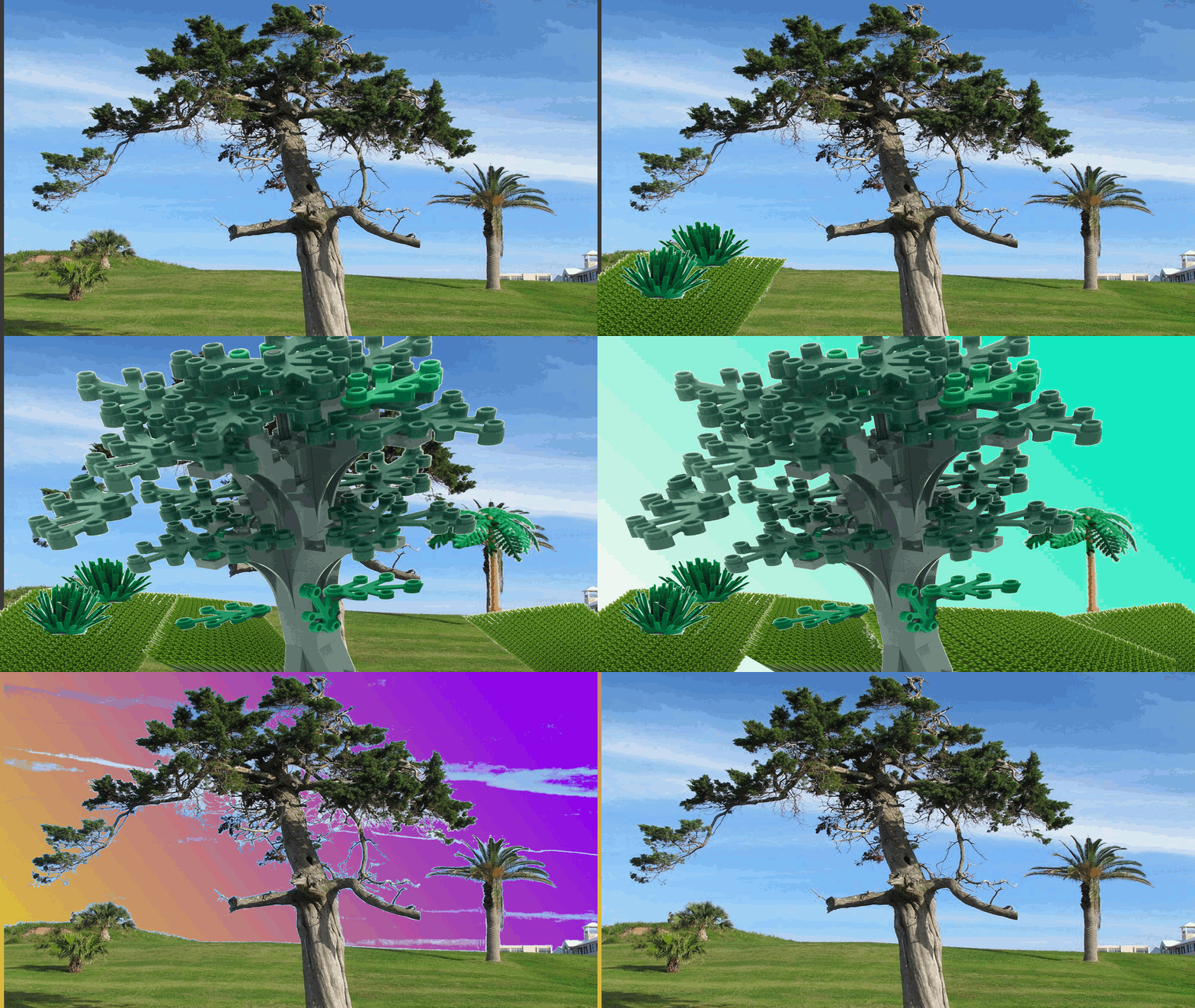
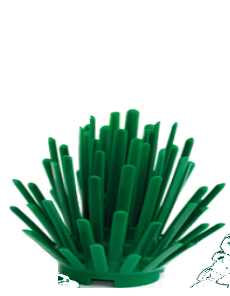
(Animation by A. Oțoiu from a collage of Lego and plasticware images)
I think “The Lorax” is a good story for nowadays society. First written in 1971, the story written by Dr. Seuss is rather suggestive: everything depends on us; everything depends on our choice to change small things and then, to change the world. The movie produced by Chris Renaud and Kyle Balda outstretches the plot on more topics. I believe this might be one of the reasons why the movie received bad reviews on IMDb, including the typical Hollywood mark on “The Lorax”:
Dr. Seuss’ The Lorax is cute and funny but the moral simplicity of the book gets lost with the zany Hollywood production values (Rotten Tomatoes)
I believe that when a movie is made with a book in mind, the book is always better than the movie. BUT, the book and the movie are two different entities. Andrei Tarkovsky once said that:
A book read by a thousand different people is a thousand different books (Goodreads).
The movie is based on “The Lorax”. The producer started from the book and from this point on, extended the idea. Images have influenced us a lot, and today, the power of imagery is even stronger, but that does not mean we cannot imagine further scenes from the original text. I’m not a connoisseur in terms of movie making, but I believe it can trigger basic emotions in children (AND not only), such as happiness, sadness, fun and tears.
The most obvious element which the movie conveys is the environmental issue our planet is facing. We almost got to the point where we live in a plastic bag. The more you analyze it, the bigger the fright gets. I mean, we live in a world where canned air already exists. But we got ourselves into it. And if we have the power to create and improve existence, could we not develop our sense of protection just as much, and actually take care of the nature that makes our life possible?
The movie is also about the power of consumerism and how people are obsessed to have the top-notch items. In the movie, when Ted is wondering where he could find a tree while eating his lunch, his mother’s reaction shows how shallow people can be and how they are trying to get rid of everything that is natural:
Why do you need a tree? It just … sticks out of the ground and it does what? I don’t even know what it does. Look! We’ve got a tree! It’s the Oak-a-matic! Three modes! Summer, Fall, Winter, and … Disco! (IMDb)
I think an important life lesson here is also that people make mistakes and suffer because of them, but eventually, it is still them that manage to find a way to get redemption. The Once-ler gets redeemed when he finally meets the Lorax again. The Once-ler realized his mistake when the last Truffula tree was cut and the Lorax left him. Ted is the one who eventually helps him to make it up for his greed and to end his period of atonement.
The producers anchor an educational purpose to this film trying to make children aware of environmental issues from a very early age. Again, the subtle idea of the book is rather lost with the movie, but everything depends on perspective, right? Dr. Seuss is more poetic, more inclined towards suggestion. Nevertheless, I believe the movie can still be enjoyed.
References:
“Dr. Seuss’ The Lorax.” Rotten Tomatoes. Accessed on 19 December 2019. https://www.rottentomatoes.com/m/the_lorax_2012.
Andrei Tarkovsky. Goodreads. Accessed on 19 December 2019. https://www.goodreads.com/author/quotes/16014.Andrei_Tarkovsky.
The Lorax. IMDb. Accessed on 19 December 2019. https://www.imdb.com/title/tt1482459/.

Selena Acqui
(written 12/21/2019)